Menu
Your Cart Items
Your Cart is empty
Begin TodaySelect Delivery Address
Select Delivery Address
BLOG
Probiotics vs. Prebiotics – What Does Your Gut Need?
Dr. Surendra K Chikara
May 22, 2024
Key Takeaways
Prebiotics vs Probiotics: Prebiotics are fibers that nourish good bacteria, while probiotics are live bacteria that support digestion and immunity.
Gut Health Benefits: Probiotics help with mental health, digestion, and immunity; prebiotics improve nutrient absorption, metabolism, and energy levels.
Signs You Need Prebiotics or Probiotics: Gut health issues like poor digestion, skin problems, or food intolerances can indicate the need for specific supplements.
Best Foods: Incorporate prebiotic-rich foods like garlic, onions, and oats, and probiotic-rich foods like yogurt, kimchi, and kefir for balance.
Prebiotics and Probiotics are the trending topics today, with the increasing temperature. The sweltering heat works as a catalyst for breeding bacteria and germs that often lead to episodes of indigestion, nausea, vomiting, dehydration, etc. The best prevention for these problems is including prebiotics and probiotics in your diet for optimal digestion and hydration. Before you go on a shopping spree for gut health supplements, let’s understand your body’s symptoms and requirements.
What Are Prebiotics?
Prebiotics are undigested fiber strands and resistant starches that act as food for gut microorganisms. The process of gut bacteria feeding on prebiotics produces short-chain fatty acids (SCFAs), which are beneficial to the body for varied bodily functions. In short, prebiotics are food for the good bacteria present in our gut. Some common prebiotic ingredients are inulin and polysaccharides.
What Are Probiotics?
Probiotics are live microorganisms that contain good bacteria for a healthy gut. These microorganisms feed on prebiotics to diversify and multiply for a healthy digestive system. Probiotics have colony-forming properties and colonize your gut with good bacteria that aid your digestive system. Some common bacteria are Bacillus, Bifidobacterium, Lactobacillus, and Escherichia.
Why Do We Need Synbiotics?
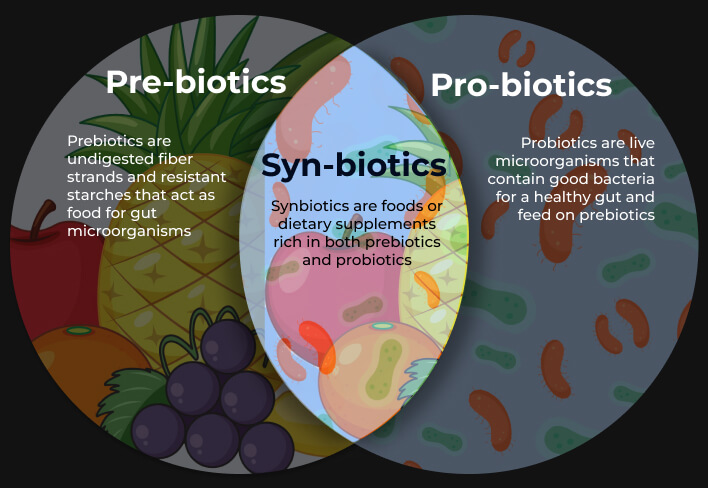
A diverse gut microbiome is highly desirable, making both prebiotics and probiotics essential to the diet. Synbiotics are foods or gut health supplements rich in both prebiotics and probiotics. Our body needs synbiotics as it is the perfect blend of prebiotics and probiotics required for an optimal gut microbiome and a healthy digestive system.
Benefits Of Probiotics
- Probiotics directly impact varied functions of the body. They influence:
- Mental health
- Digestive health
- Immunity
- Reduces inflammation
- Manages skin issues
- It helps manage IBS, GERD issues, acidity
- Relieves upper-respiratory tract infections
Benefits Of Prebiotics
Prebiotics directly impact varied functions of the body. They influence:
- Nutrient Absorption
- Increases Metabolism
- Improves Digestive Health
- Strengthens Immunity
- Relieves Allergies
- Higher Energy Levels
- Weight Management
Prebiotics vs Probiotics. What Does Your Gut Need?
Now, all this knowledge is well and good, but how does one know if their body needs prebiotics, probiotics or synbiotics? Mostly, prebiotics and probiotics work in partnership, which is why synbiotics are popular gut health supplements.
Still, our bodies have certain signs and symptoms that help determine what our gut lacks and what we need for a healthy digestive system. You can also try easy at-home gut microbiome test kits for a detailed report on the composition and diversity of your gut microbiome, along with guidance and insights from experts.
Symptoms Your Body Needs Probiotics
The human body contains tens of trillions of viruses. Probiotics have a symbiotic relationship with other microorganisms present in the colon, mouth, gut tract, intestines, etc. The various signs that your body needs probiotics are:
- Insomnia
- Bowel disorders
- Skin issues
- Low Immunity
- Mood swings
Symptoms Your Body Needs Prebiotics
Many times, your gut microbiome is diverse and doesn’t lack good bacteria. In such cases, your gut microbiome needs prebiotics for the probiotics to flourish. Here are some signs your body needs prebiotics:
- Food Intolerances
- Developing allergies
- Weakness
- Poor absorption of nutrients
- Frequent stomach infections
Symptoms of an unhealthy gut can also vary in every individual, so pay attention to your bowel movements, as they are the key to your gut health.
How To Balance Probiotics And Prebiotics In Diet?
It isn’t always necessary for individuals to choose supplements for prebiotics and probiotics. They are present in various readily available foods and can be incorporated into daily diet. The trick is to add foods from both categories into your diet. Ensure you add fiber-rich foods to your diet to achieve the perfect balance.
Best Prebiotic Foods
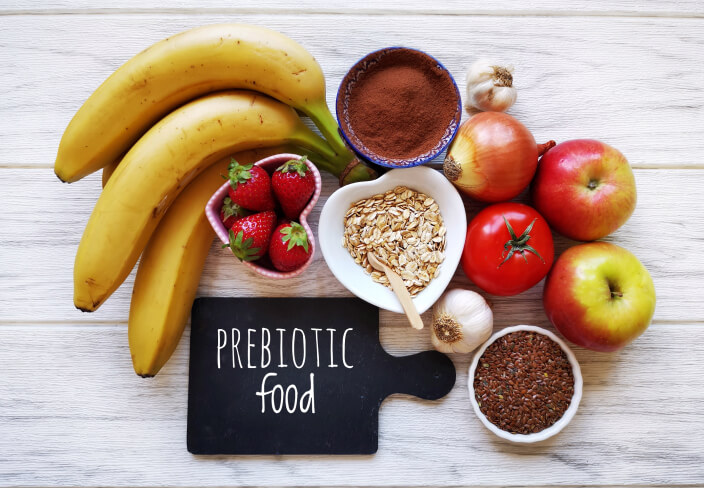
- Garlic
- Onions
- Leeks
- Asparagus
- Bananas
- Oats
- Apples
- Chicory Root
- Artichokes
Best Probiotic Foods
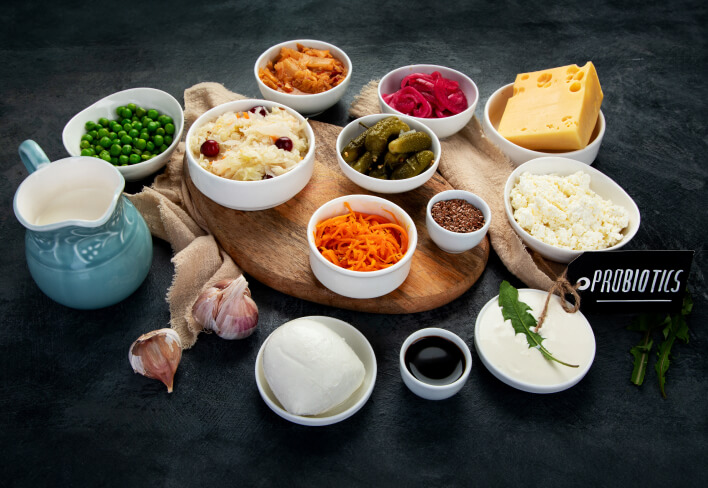
- Yoghurt Kefir Sauerkraut Kimchi Miso Tempeh Pickles Kombucha
The Bottom Line
Balancing your prebiotic and probiotic intake is essential for a diverse gut microbiome. The gut microbiome, in turn, helps maintain a healthy, well-oiled digestive system. Do not change your diet entirely overnight. Diet change is a gradual process because our bodies take some time to adjust and digest rich foods. Similarly, do not expect immediate results as the digestion takes some time to show visible results. However, you can feel slight changes in your bowel movements, energy levels, overall mood, immunity, etc, in a few weeks of dietary changes.
Remember, sudden changes or overdoing might lead to opposite results. Introduce these foods gradually into your diet in small amounts. Also, avoid junk food and heavy foods for better results.
FAQs
Yes, both are essential for a healthy gut. Probiotics are beneficial bacteria that improve digestion and immunity, while prebiotics are fibers that feed these bacteria, helping them thrive. Together, they support optimal gut health and overall well-being. Including a variety of foods rich in both can naturally balance your microbiome.
You might need probiotics if you experience digestive issues like bloating, gas, constipation, diarrhea, frequent infections, skin problems, mood swings, or symptoms of Irritable Bowel Syndrome (IBS). These signs suggest an imbalance in your gut bacteria that probiotics can help correct.
You can get enough prebiotics from your diet by consuming various prebiotic-rich foods. Garlic, onions, leeks, asparagus, bananas, oats, apples, and chicory root are excellent sources of prebiotics. Including these foods regularly in your meals can help maintain a healthy gut microbiome.
Probiotics help gut health by introducing beneficial bacteria that balance the gut microbiome. They improve digestion, boost the immune system, reduce inflammation, and can alleviate symptoms of conditions like Irritable Bowel Syndrome (IBS). Probiotics also enhance nutrient absorption and support overall digestive health.
Yes, prebiotics are necessary for a healthy gut. They serve as food for beneficial gut bacteria, promoting their growth and activity. This helps maintain a balanced gut microbiome, improves digestion, enhances nutrient absorption, and supports overall immune function.